For years, digital asset innovation has centered on speculative growth, dominated by Bitcoin and other altcoins. But as tokenization matures, institutional attention is shifting toward blockchain’s quieter revolution: fixed income. Programmable bonds, tokenized treasuries, and on-chain commercial paper are creating debt markets that combine yield stability with real-time transparency.
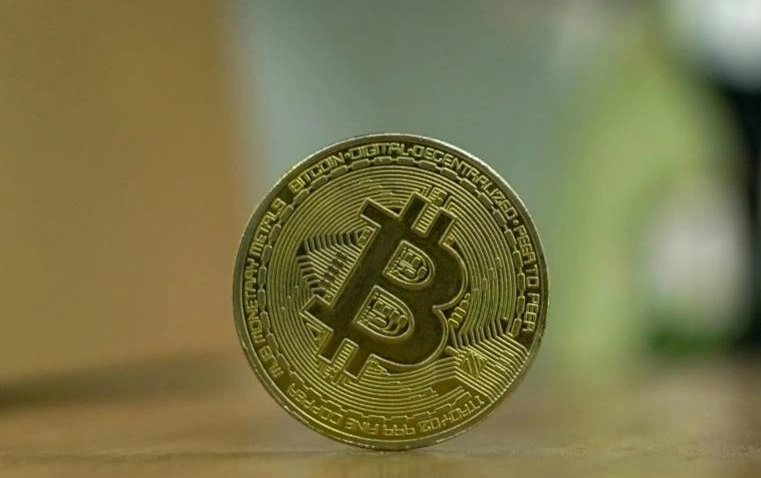
From speculation to structure: Bitcoin’s legacy evolves as blockchain underpins the next generation of programmable debt instruments.
According to Citi’s 2025 Future of Finance Report, tokenized bonds and treasuries could represent over $5 trillion in value by 2030, reshaping how global capital markets issue, trade, and settle debt instruments. The appeal lies not in volatility, but in automation, verifiability, and the efficiency of blockchain-based investment opportunities.
This evolution is backed by projects such as Siemens’ €60 million on-chain bond, UBS’s $375 million tokenized note on Ethereum, and HSBC’s Orion digital platform. These real-world deployments prove that fixed income, not just equities or crypto assets, stands to benefit from blockchain’s transparent and programmable architecture.
From Paper to Protocol: The Rise of Programmable Bonds
Traditional bond markets rely on intermediaries for issuance, payment collection, and interest distribution. This dependency adds cost, delays, and reconciliation risks. Programmable bonds replace manual processes with smart contracts that automatically execute coupon payments and maturity redemptions.
For example, the European Investment Bank (EIB) has issued multiple blockchain-based bonds since 2021, streamlining settlement from five days to under an hour using digital registries. Each issuance is cryptographically verifiable, enhancing auditability and reducing counterparty friction.
In parallel, the World Bank’s “bond-i” project, built on distributed ledger technology, demonstrated that blockchain can support primary issuance and post-trade processes simultaneously. These initiatives are prompting fund management companies and crypto investment firms to re-evaluate traditional custody and reporting models, considering digital infrastructure efficiencies.
Institutions adopting programmable bond systems often work with secure digital asset consulting solutions to integrate smart contract logic into their treasury workflows. Strategic digital asset consulting partners help ensure that these new frameworks meet compliance obligations while aligning with internal governance standards.
Tokenized Treasuries: The Institutional Yield Alternative
Tokenized treasuries have become one of the fastest-growing segments in decentralized finance (DeFi). Platforms like Ondo Finance, Backed, and Hashnote are issuing blockchain-based representations of short-term U.S. government debt, allowing investors to access stable, yield-bearing products on-chain.
As of Q3 2025, tokenized treasuries exceeded $2.5 billion in circulation, according to RWA.xyz, up from less than $200 million a year earlier. Institutional participants view them as a secure entry point into on-chain yield markets, supported by transparent audit trails and regulated custodianship.
By tokenizing low-risk debt instruments, institutions are bridging the gap between traditional fixed income and digital liquidity. This convergence has fueled a wave of digital asset management consulting activity, where firms assist asset managers in connecting custody solutions, compliance systems, and blockchain-based yield products.
For treasurers, tokenized instruments reduce operational costs, increase access to global liquidity, and allow for real-time valuation and collateral optimization. Through digital asset advisory services, custodians can dynamically allocate assets across networks while maintaining oversight through blockchain audit logs.
Commercial paper, the short-term funding tool of global corporates, is also migrating to blockchain. In 2024, Santander CIB and Broadridge tested a blockchain-based commercial paper platform capable of instant issuance and secondary trading.
These systems tokenize corporate debt obligations, allowing investors to track maturity cycles, cash flows, and yield performance directly on-chain. The integration of smart contracts ensures that issuers meet coupon obligations while providing regulators and auditors with transparent data access in real time.
This level of automation reduces settlement costs by up to 35%, according to EY’s 2025 Digital Bonding Report, and mitigates counterparty risk across the funding chain. For venture capital fund management entities and digital asset portfolio management firms, on-chain commercial paper offers a low-volatility diversification channel with verifiable exposure and programmable redemption schedules.
Digital asset consulting for compliance plays a key role in these pilots, ensuring that tokenized debt products align with market regulations under frameworks like MiCA (EU) and FINMA (Switzerland).
Transparency, Auditability, and Counterparty Assurance
Blockchain’s greatest contribution to fixed income lies in its ability to make trust visible. Through public or permissioned ledgers, every issuance, payment, and maturity is timestamped and verifiable. This reduces dependence on central record keepers while simplifying audit and risk assessments.
Institutional custodians like Clearstream and DTCC are developing blockchain-integrated platforms that allow regulators and auditors to monitor asset flows continuously. Such systems align with best practices in digital asset consulting, helping financial institutions integrate blockchain’s transparency without compromising privacy or control.
In parallel, tokenized KYC and counterparty assurance protocols are emerging to enhance trust between issuers and investors. Platforms like Aave Arc and Centrifuge are introducing permissioned pools for institutional investors, ensuring that only verified entities can participate in tokenized lending or bond issuance.
These advancements support the broader trend toward secure digital asset consulting solutions and finance asset management consulting frameworks that emphasize governance automation, verifiable audit trails, and compliance-first design.
Regulatory and Accounting Momentum
A significant milestone for blockchain fixed income came in 2025, when the U.S. Financial Accounting Standards Board (FASB) approved ASU 2023-08, allowing crypto assets to be measured at fair value through profit and loss (FVPL). This move paved the way for institutions to report tokenized debt holdings more transparently.
Meanwhile, the International Organization of Securities Commissions (IOSCO) is drafting guidance on the classification of tokenized debt instruments, aiming to harmonize reporting standards across jurisdictions.
The blockchain networks now supporting programmable bonds and tokenized treasuries are redefining transparency in global fixed-income markets.
These shifts indicate growing recognition of blockchain-based assets as legitimate financial instruments rather than experimental products. Evaluating digital asset consulting firms has thus become a key step for institutions seeking to modernize compliance workflows and ensure alignment with evolving global standards.
Institutional Adoption: From Pilots to Market Integration
The transformation of fixed income is well underway. UBS, HSBC, Goldman Sachs, and BNP Paribas have all conducted tokenized bond or note issuances on public and private blockchains since 2022. Each project shares a common goal: faster settlement, greater transparency, and integrated compliance automation.
This ecosystem shift is also driving demand for digital fund advisory, blockchain asset consulting, and crypto asset management support. Institutions want scalable models for issuing and managing tokenized debt across multiple networks while maintaining regulatory integrity.
A New Paradigm for Institutional Yield
Blockchain-native fixed income instruments combine programmability, transparency, and regulatory compatibility—the three ingredients required for global adoption. They represent an evolution, not a replacement, of existing systems.
As more governments and corporations issue digital debt, the infrastructure being built today will form the foundation for tomorrow’s borderless capital markets. For investors, the ability to audit, verify, and settle positions in real time will redefine what fixed income means in the digital age.
Build the Next Generation of Fixed Income Infrastructure
Institutions seeking to unlock programmable yield and transparent bond markets can partner with Kenson Investments, a strategic digital asset consulting partner specializing in innovative solutions. Through digital asset management consulting services, Kenson helps organizations design, issue, and manage blockchain-native fixed income products that meet institutional compliance, security, and performance standards.
About the Author
This article was written by a contributor specializing in digital assets consulting and institutional blockchain applications. The author focuses on how programmable debt, tokenization, and regulatory innovation are reshaping institutional yield strategies across global financial markets.
Disclaimer: The information provided on this page is for educational and informational purposes only and should not be construed as financial advice. Crypto currency assets involve inherent risks, and past performance is not indicative of future results. Always conduct thorough research and consult with a qualified financial advisor before making investment decisions.
“The crypto currency and digital asset space is an emerging asset class that has not yet been regulated by the SEC and the US Federal Government. None of the information provided by Kenson LLC should be considered as financial investment advice. Please consult your Registered Financial Advisor for guidance. Kenson LLC does not offer any products regulated by the SEC, including equities, registered securities, ETFs, stocks, bonds, or equivalents.”
I am a forex trader and I blog about my adventures in the world of foreign exchange. Forex trading is not for everyone, but it has been one of the most interesting ventures that I have embarked on so far. It’s like walking through an old haunted house; you don’t know what you’re going to find next!